Mark 8:13-21
 And he left them, got into the boat again, and went to the other side.
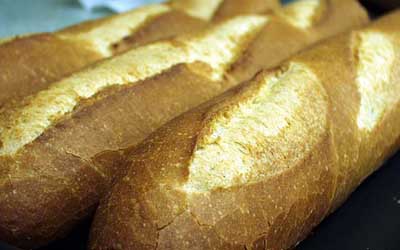
Now they had forgotten to bring bread, and they had only one loaf with them in the boat. And he cautioned them, saying,
“Watch out; beware of the leaven of the Pharisees and the leaven of Herod.”
And they began discussing with one another the fact that they had no bread. And Jesus, aware of this, said to them,
“Why are you discussing the fact that you have no bread? Do you not yet perceive or understand? Are your hearts hardened? Having eyes do you not see, and having ears do you not hear? And do you not remember? When I broke the five loaves for the five thousand, how many baskets full of broken pieces did you take up?”
They said to him, “Twelve.”
“And the seven for the four thousand, how many baskets full of broken pieces did you take up?”
And they said to him, “Seven.”
And he said to them, “Do you not yet understand?”
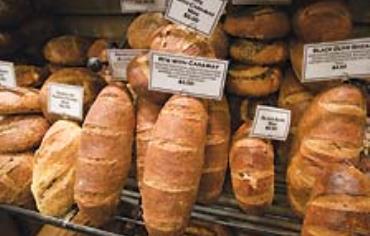 Leaven in Scripture is almost always a negative image. Leaven was not like the commercial yeast we use today but was actually raw dough that was saved from the previous baking day and mixed in with the new dough to help it rise. It was possible to still have some of the raw dough for up to a year in that lump. So it was somewhat like our sourdough starter…passing on the corruption from batch to batch. Each year, the Feast of Unleavened Bread was a time of cleaning & purification, which was both hygienically practical and spiritually necessary. Leaven indicated the presence of bacterial waste products and it caused something to appear to be more than it really was. Jesus always spoke harshly of judging by appearances and of falling into the error of hypocrisy. Here, Jesus warned the disciples about the leaven of both the Pharisees and the Herodians. What did he mean? Why is this in the Bible?
 They thought he was talking about bread—He said, "You're missing the point again!" Jesus is not dependent upon us for his next meal. Instead he provides us with our daily bread!
Now they had forgotten to bring bread, and they had only one loaf with them in the boat. And he cautioned them, saying,
“Watch out; beware of the leaven of the Pharisees and the leaven of Herod.”
And they began discussing with one another the fact that they had no bread. And Jesus, aware of this, said to them,
“Why are you discussing the fact that you have no bread? Do you not yet perceive or understand? Are your hearts hardened? Having eyes do you not see, and having ears do you not hear? And do you not remember? When I broke the five loaves for the five thousand, how many baskets full of broken pieces did you take up?”
They said to him, “Twelve.”
“And the seven for the four thousand, how many baskets full of broken pieces did you take up?”
And they said to him, “Seven.”
And he said to them, “Do you not yet understand?”
Comments:
In v. 15 when Jesus warned them saying, “Watch out; beware of the leaven of the Pharisees and the leaven of Herod” he wasn't talking about the ingredients of physical bread, but about a realistic view of who they (the disciples) were and who he (Jesus) was.
To encourage a realistic view of ourselves:
When Jesus warned his disciples to beware of “the leaven of the Pharisees and the leaven of Herod” he was speaking of their corrupting influences. The Pharisees were filled with hypocrisy and the Herodian rulers were sold out in their support of the Romans and were devoid of godly convictions. Everything was about staying in power and enjoying the fruits of such privilege.
· The leaven of the Pharisees = religious self-righteousness and hypocrisy that causes us to appear greater than we are. It also can cause us to think more highly of ourselves in relation to others. It leads to a spiritual superiority complex that looks down on the "less holy."
· The leaven of Herod = These were the people who were overtly wicked, who exercised ungodly authority, position, and the kind of pleasures that tend to make us think we are more important and valuable than we are. Sin makes us think that we are "somebody" when really we are a miserable nobody.
Both leavens puff us up. Remember, the bread dough is puffed up by the waste product of the bacteria. Corrupt ideas and values work the same way. So what are the ideas, values, and behaviors that pervade and corrupt our own culture? Are we suffering from a spiritual yeast infection? We need the unleavened bread of confession and true faith in Christ—
To encourage a realistic view of Christ:
The disciples were worried that they had only brought one loaf of bread with them (and that would have been for Jesus) so they probably thought that there would be nothing for themselves. Ironically they worried about bread while in the very presence of the Bread of Life. They were worried about procuring their next meal while in the company of the One who had just fed 5000 and 4000 people with nothing more than a couple of barley bagels and a sardine or two.
The Pharisees and the Herodians thought too much of themselves and not enough of God. They saw the temporal more clearly than the eternal. The disciples were doing the same thing—thus, Jesus warned them of their danger.
 They thought he was talking about bread—He said, "You're missing the point again!" Jesus is not dependent upon us for his next meal. Instead he provides us with our daily bread!
And for that meal I am truly and abidingly thankful!


